
- Home
- Bitcoin mixer FAQ
Bitcoin mixer FAQ
Twelve short, direct answers to the questions people ask most often about Bitcoin mixers: what they are, what they cost, how long they take and how to use one without nasty surprises.
01The basics of a Bitcoin mixer
What is a Bitcoin mixer in simple terms?
It is a service or protocol that swaps your coins for coins with a different history. You send BTC in and receive the same value, minus a fee, at new addresses, so the on-chain link between the two is much harder to see.
Is a BTC mixer the same as a Bitcoin tumbler?
Yes. Mixer, tumbler and blender are different names for the same idea. Some people use tumbler for custodial services and CoinJoin for collaborative ones, but there is no strict rule.
Why would an ordinary person mix Bitcoin?
To keep personal finances out of public view. Without mixing, anyone who learns one of your addresses can see your balance, your income and the people you pay. Mixing restores the kind of privacy a bank account gives by default.
What is the difference between custodial mixing and CoinJoin?
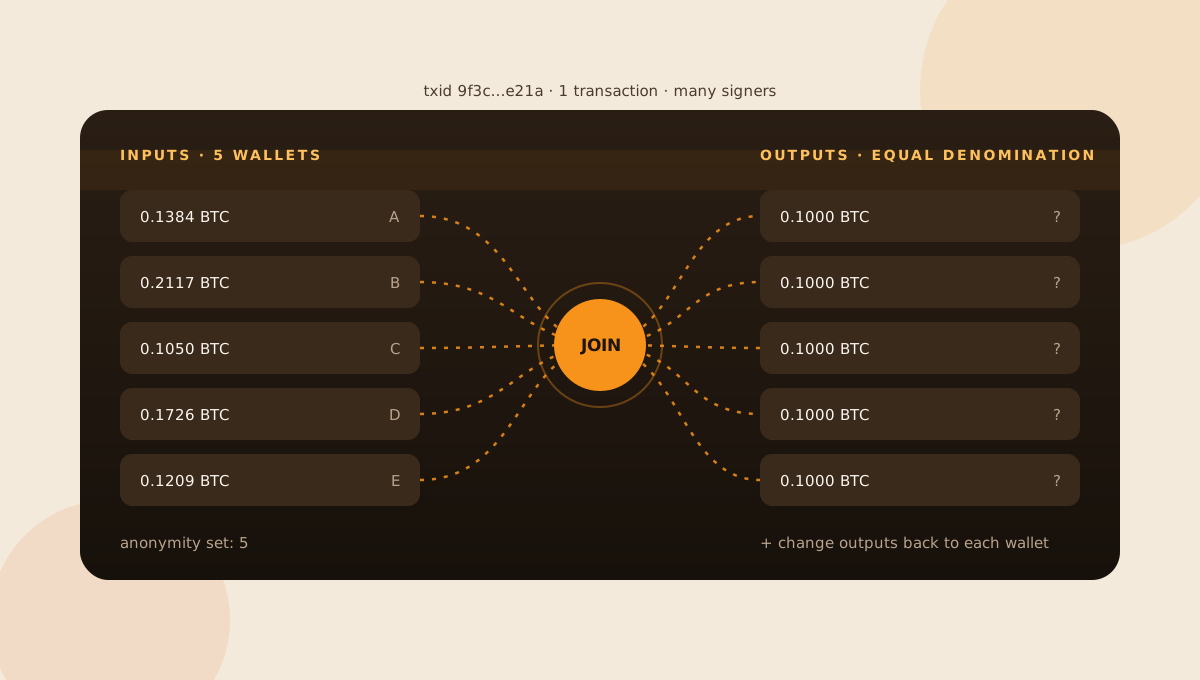
A custodial mixer takes your coins and pays you from its reserve, so you trust the operator for a while. CoinJoin builds one shared transaction that everyone signs; nobody else ever holds your coins.
02Fees, limits and timing
How much does a mixing service charge?
Custodial services usually charge about 0.5% to 3% of the amount plus the network fee. CoinJoin costs a coordinator or maker fee plus miner fees, which is often cheaper for larger amounts.
Is there a minimum amount?
Almost always. Custodial services often set a minimum around 0.001 BTC so the fee covers network costs. CoinJoin rounds have their own minimum, which depends on the coordinator and the current fee level.
How long does Bitcoin mixing take?
From under an hour to a day. The time depends on the confirmations the service waits for and the delay you choose. A longer, random delay usually gives better privacy.
Can I split the payout between several addresses?
Most custodial services let you add several output addresses with custom percentages. Splitting into uneven parts makes the payout look less like a single transfer.
03Safety and good practice
Is it safe to use a mixing service?
It can be, if you pick a service with a long record, a signed letter of guarantee and a clear policy, and start with a small test. The main risks are clone sites and operators that disappear with deposits.
How do I recognise a fake mixer site?
Look-alike domains, links from ads or chats, missing guarantee letters and unrealistic promises are typical warning signs. Type the address yourself, compare it with a trusted listing and bookmark it.
Will an exchange accept mixed coins?
Policies differ. Many exchanges accept them but may ask where the funds came from, and some close accounts that receive mixer outputs directly. Keep records of the original source of your coins.
Does mixing make my Bitcoin fully private?
No. It weakens the link at one point in the chain. Reusing addresses, merging mixed and unmixed coins or sharing an address publicly can undo that work, so good habits after the mix matter as much as the mix itself.
Still have questions about BTC mixers?
The guides below go deeper than a short answer can. Start with the mechanics if the terms are new to you, or jump straight to the comparison if you already know what you need. Questions or corrections are welcome through our contact page; we update this FAQ when rules or services change.
Compare before you choose
Three Bitcoin mixers scored on the same eight criteria.