
BTC Mixers: the privacy layer Bitcoin forgot to ship
Anyone who learns one of your addresses can read your balance, your income and the people you pay. A Bitcoin mixer cuts that thread. Flip the switch in the explorer to see what changes.
- Linked addresses
- 14
- Visible balance
- 0.8412 BTC
- Known sources
- Exchange · employer
- Payees seen
- 23
One address leads to 14 others. Analysts call this a cluster.
One BTC mixer order, hour by hour
Forget abstract diagrams. Here is what a real custodial order of 0.25 BTC looks like on the clock, with three payout addresses and a random delay.
Order created
You add three fresh addresses, split 40 / 35 / 25 and pick a delay window.
Guarantee saved
The service signs your deposit address. You download the letter.
Deposit confirmed
Your coins join the reserve. They will never come back to you.
First payout
0.0985 BTC lands at address one, sent from unrelated reserve coins.
Order closed
The last two payouts arrive at random moments. Logs are cleared.
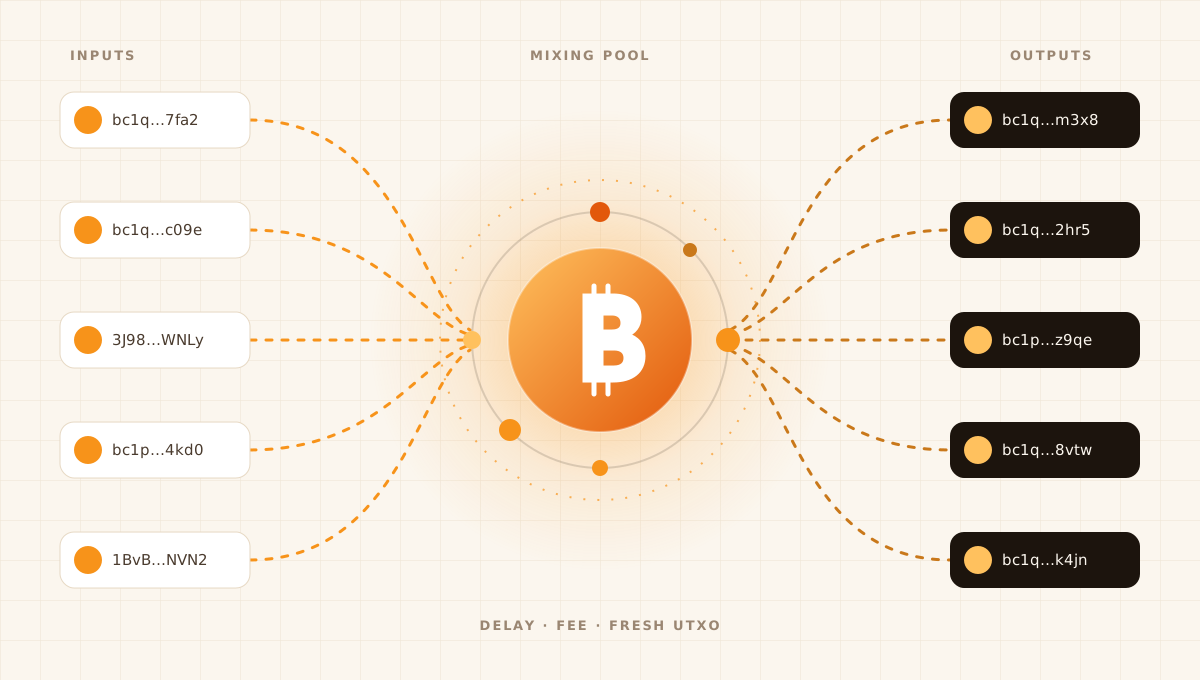
Notice what an observer sees: a deposit into a large address set, and hours later several unrelated payouts of uneven size. No amount matches, no time matches, no address repeats. That is the whole trick of Bitcoin mixing.
CoinJoin reaches the same goal differently: many users sign one shared transaction with equal outputs, so nobody ever holds your coins. Details for both methods are in how a Bitcoin mixer works.
Which Bitcoin mixer fits you?
Three questions, no email, no tracking. Your answers stay in this browser tab.
Bitcoin mixers in four numbers
Four myths about the crypto mixer
Hover or tap a card to turn it over.
Bitcoin tumbler vocabulary in five terms
Reviews of any Bitcoin tumbler use the same handful of words. Learn these and every service page becomes easy to read.
- UTXO
- An unspent transaction output: the actual “coin” a Bitcoin wallet holds. Each one carries its own visible history.
- Chain analysis
- Software that groups addresses into clusters by looking at shared inputs, change outputs, amounts and timing.
- Anonymity set
- The number of identical outputs your coin hides among after a CoinJoin round. Bigger is better.
- Letter of guarantee
- A message signed by a custodial Bitcoin mixer that proves which deposit address it issued for your order.
- Coordinator
- The server that assembles a CoinJoin transaction. It never holds coins; every participant signs for themselves.
Before you use BTC mixers: four checks
Privacy is legal in most countries, but exchanges and regulators look closely at mixed coins. Read our legal overview for your region.
- Origin. Mix only coins you can document: statements, invoices, payouts.
- Address. Type the service URL yourself and bookmark it; clone sites are common.
- Test. Send a small amount first and keep the guarantee letter.
- Afterwards. Never merge mixed and unmixed coins in one payment.