
- Home
- How a Bitcoin mixer works
How does a Bitcoin mixer work?
Bitcoin mixing is less mysterious than it sounds. Below we follow a coin from your wallet into a mixing pool and out the other side, compare the custodial and CoinJoin methods, and list the settings and habits that decide how much privacy you actually keep.
Why Bitcoin needs mixing at all
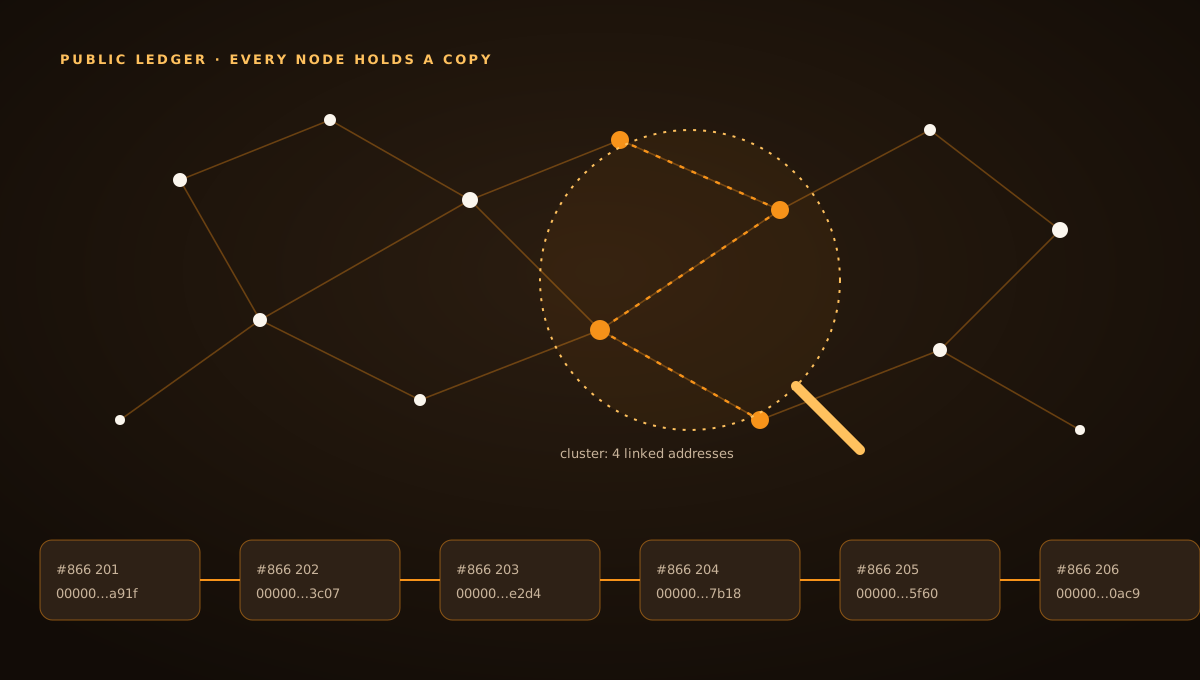
Bitcoin does not store balances. It stores unspent transaction outputs, or UTXOs, and each one carries a visible history back to the moment it was created. When you pay someone, your wallet picks several UTXOs, spends them as inputs and creates new outputs: one for the recipient and usually one for your change.
Analysts rely on a few simple rules to read this data. If several inputs appear in one transaction, they probably belong to the same wallet. If one output is a round number and the other is not, the odd one is likely change. If coins move at the same time and in the same amount, they are probably related. Applied across millions of transactions, these rules turn pseudonymous addresses into readable profiles.
A Bitcoin mixer attacks exactly these rules. It breaks common ownership, hides change and blurs timing, so the clustering becomes guesswork rather than evidence.
How a custodial Bitcoin tumbler processes an order
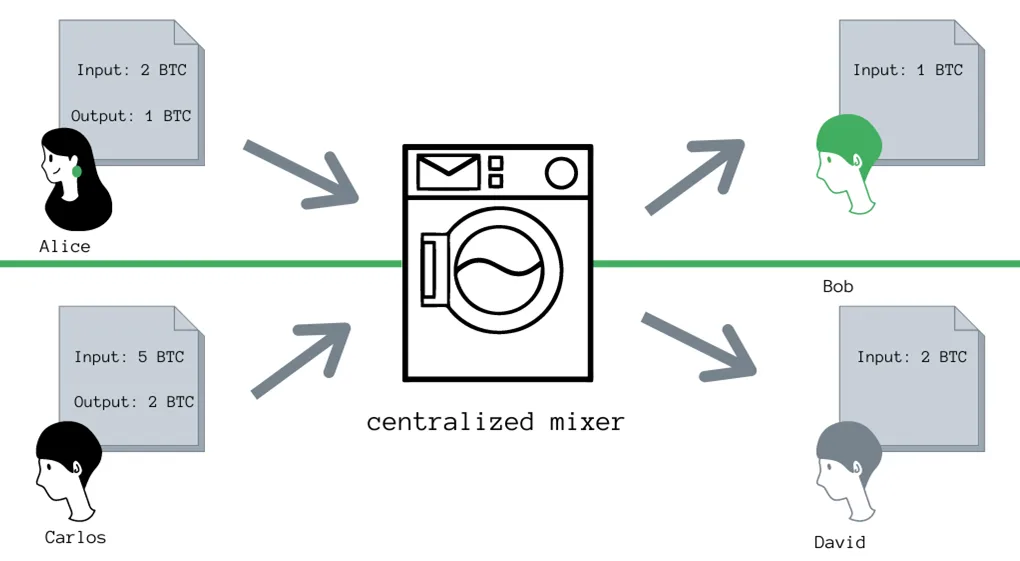
A custodial Bitcoin tumbler keeps a large reserve of coins collected from many users over time. You never get your own coins back; you get an equal value from that reserve. A typical order looks like this:
Set the output addresses
Enter one or more fresh receiving addresses and, if the service allows, the share of coins each one should get.
Choose a delay
Pick a fixed or random delay. Longer and irregular delays make timing correlation harder.
Save the guarantee
Download the signed letter of guarantee that proves which deposit address the service issued to you.
Send the deposit
Send BTC to the deposit address. The service waits for the number of confirmations it states.
Receive the payout
Coins from the service's reserve, not your own, are sent to your addresses after the delay.
Logs are cleared
A reputable operator deletes order data after completion, as described in its published policy.
How CoinJoin Bitcoin mixing works
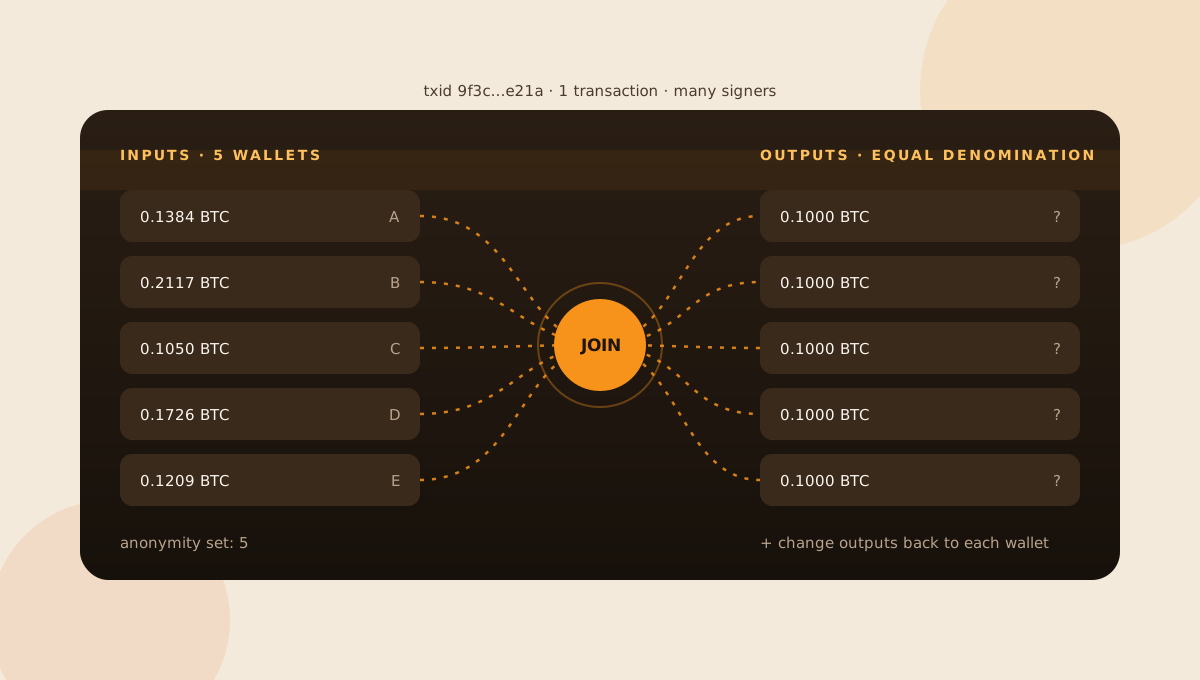
CoinJoin takes a different route: instead of trusting an operator, several people build one shared transaction. Each participant adds inputs, and the transaction creates outputs of the same value for everyone, plus individual change. Because the outputs look identical, an observer cannot tell which belongs to whom. A coordinator only assembles the transaction; it never holds the coins, and each user signs only after checking that their own output is present.
The key number is the anonymity set: how many equal outputs your coin hides among. Five is modest; fifty or more is strong. Modern protocols such as WabiSabi also allow outputs of several standard sizes, which reduces leftover change.
Settings that change the quality of a BTC mixer
Delay
A random delay of several hours protects better than an instant payout, because timing is one of the easiest signals to match.
Output splitting
Sending to three to five addresses in uneven shares avoids an obvious one-in, one-out pattern.
Amount
Very large or very precise amounts stand out. Common sizes blend in more easily with the rest of the pool.
Fee randomization
Some services add a small random fee so that the amount received never equals the amount sent minus a fixed rate.
After the mix: habits that keep your privacy
Most privacy is lost after using a Bitcoin mixer, not during the mix. A few rules help:
- Never combine mixed and unmixed UTXOs in one transaction; that reconnects both histories instantly.
- Use a new address for every receipt and turn on coin control in your wallet.
- Avoid sending all outputs to one destination at once; that simply merges them back together.
- Run your own node or connect through Tor so wallet servers cannot see your addresses.
Know how it works? Pick a service.
See which Bitcoin mixers score best on custody, fees and delay control.